
Industrial Stone Paper Turnkey Project Engineering at Suzhou CMT: Machinery, Know-How, and Startup
CHANGSHU, JIANGSU, CHINA, October 29, 2026 /EINPresswire.com/ -- Developing a commercial Stone Paper Production Line
Press Release Disclaimer: This is a press release distributed through the XPR Media network. It has not been independently verified by our newsroom.
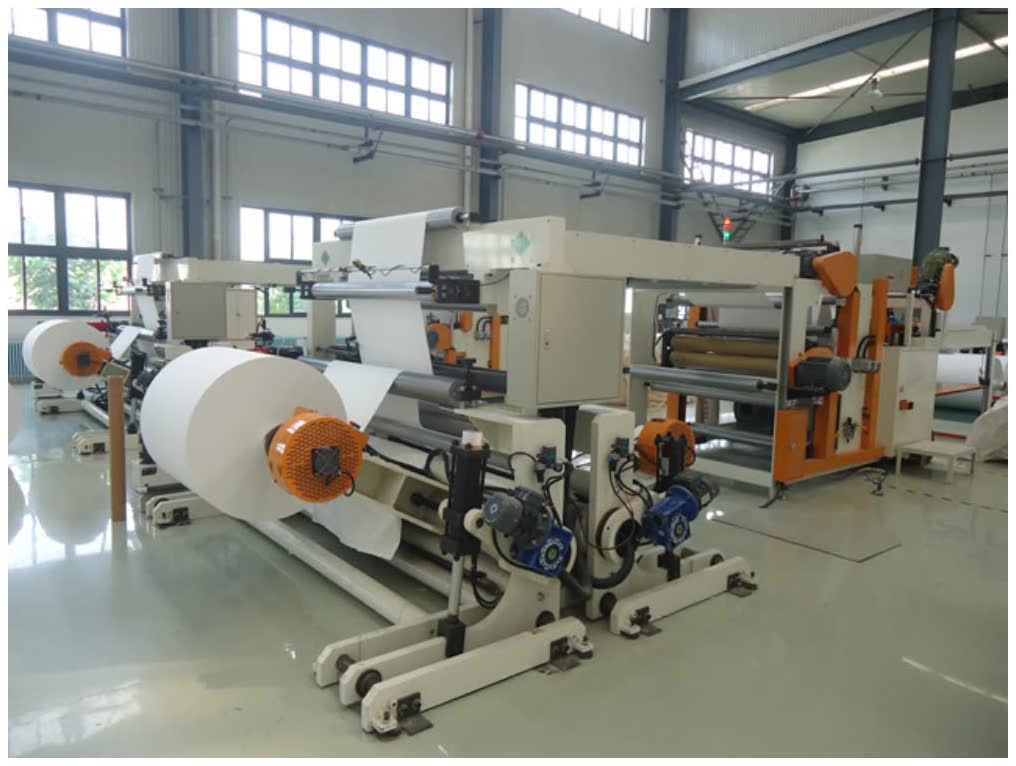

CHANGSHU, JIANGSU, CHINA, October 29, 2026 /EINPresswire.com/ — Developing a commercial Stone Paper Production Line requires bridging high-fill polymer compounding with high-precision sheet extrusion and surface functionalization. Engineering teams evaluate local calcium carbonate mineral deposits, polymer melt flow indexes, and target caliper profiles to deliver water-free, acid-free synthetic paper substrates. Single-source turnkey engineering coordinates compounding extruders, multi-roll casting calenders, and biaxial stretching units into an integrated operational plant.
Stone paper represents a transformative, tree-free alternative to traditional wood pulp paper. The manufacturing process consumes zero process water, produces zero toxic effluent, and eliminates harsh bleaching chemicals like chlorine. Finished synthetic paper sheets deliver natural water resistance, grease barrier properties, high tear strength, and excellent folding endurance for high-end packaging, labels, and commercial printing.
Raw Material Formulations: Surface Modification of Calcium Carbonate and Polyethylene Blending
Achieving commercial paper mechanical integrity requires high-density mineral loading while maintaining flexible polymer matrix continuity. Mineral surface chemistry determines interfacial bonding between inorganic calcium carbonate particles and organic polyolefin resins.
Mineral Micronization and Sizing: High-purity limestone undergoes continuous dry ultrafine grinding to produce calcium carbonate powder with particle sizes between 1,200 and 2,500 mesh, exhibiting steep particle size distributions.
Silane and Titanate Coupling: High-speed continuous modifying mixers coat mineral particles with organic coupling agents and stearic acid at 110°C, converting hydrophilic mineral surfaces into organophilic interfaces.
Polymer Matrix Compounding: Continuous co-rotating twin-screw extruders compound seventy to eighty percent modified mineral powder with twenty to thirty percent virgin or recycled high-density polyethylene and processing additives.
Proper surface modification prevents mineral agglomeration inside the melt, ensuring uniform dispersion and eliminating stress concentration points in finished paper sheets. Gravimetric loss-in-weight feeders meter polymer pellets, mineral powders, and compatibilizers into compounding extruders, maintaining formulation accuracy within 0.2 percent. High-torque twin-screw extruders utilize specialized screw geometries featuring kneading blocks and distributive mixing elements. Vacuum degassing ports extract volatilized moisture and entrapped air, preventing void formation during downstream melt processing.
Core Extrusion and Dual-Direction MDO/TDO Film Stretching Machinery
Forming mineral-filled masterbatch compounds into flat paper webs demands specialized extrusion dies and controlled thermal orientation equipment. Precision mechanical engineering guarantees uniform caliper thickness and isotropic tensile strength across wide web widths.
Heavy-Duty Cast Sheet Extrusion: Extruders feed molten polymer-mineral blends through automatic coat-hanger flat dies onto oil-heated chrome casting rolls, producing dense base sheets with uniform thickness.
Machine Direction Orientation: Preheated multi-roll MDO units stretch base sheets lengthwise between differential-speed heated rolls, inducing molecular orientation and micro-voiding.
Transverse Direction Orientation: Tenter frame TDO ovens grip sheet edges in moving chain clips, heating and expanding the web sideways under precisely staged thermal zones.
Controlled biaxial stretching generates microscopic voids around calcium carbonate particles, lowering sheet specific density from 1.6 g/cm³ down to 1.0–1.2 g/cm³. This micro-voiding structure delivers paper-like opacity, bright whiteness, and velvety surface texture without requiring titanium dioxide pigments. Automatic thermal bolt die systems interface with continuous beta-gauge or x-ray radiometric thickness scanners. Closed-loop control algorithms adjust flexible die lip heater bolts in real time, maintaining transverse caliper variations within plus or minus two micrometers.
Heavy-duty cast chill rolls utilize internal spiral water channels and high-precision temperature control units to maintain surface temperature uniformity within 0.5°C across the entire roll face. Pneumatically actuated edge trim slitters slice uneven sheet margins continuously, routing clean trim ribbons into dedicated inline granulators for immediate closed-loop re-compounding.
Surface Coating Chemistry, Corona Treatment, and Slitting Operations
Untreated synthetic polymer surfaces exhibit low surface energy, causing poor ink adhesion and printing defects. Post-extrusion surface modification prepares stone paper webs for high-speed commercial offset, flexographic, and digital printing presses.
High-Output Corona Discharge: High-frequency dielectric corona treatment stations bombard moving webs with ionized air discharges, elevating surface dyne levels above forty-two dynes per centimeter.
Waterborne Functional Coating: Gravure coating stations apply microscopic layers of hydrophilic acrylic binders and mineral pigments, creating microporous ink-receptive topcoats that accelerate drying.
Precision Winding and Slitting: Center-surface turret winders maintain controlled taper tension profiles, preventing internal web slippage, roll dishing, or edge curl during continuous winding.
Multi-stage flotation drying ovens circulate heated air to dry applied surface coatings without inducing thermal web shrinkage. Chilled outfeed rolls rapidly stabilize the web prior to contact winding, preserving flawless sheet flatness and eliminating static electrical charges. High-resolution optical inspection cameras continuously scan moving paper webs at line speeds exceeding one hundred meters per minute. Automated defect classification software instantly flags pinholes, coating streaks, or surface inclusions, ensuring that only flawless rolls proceed to finished slitting.
Heavy-duty automated rotary sheeters cut mother rolls into precision rectangular reams for commercial sheet-fed printing. Synchronized palletizing systems wrap and strap finished paper reams in protective barrier film for ocean freight shipment.
Single-Source EPC Contracting and Plant Logistics Integration
Building a high-capacity mineral synthetic paper manufacturing facility demands unified contracting across heavy civil engineering, high-torque mechanical fabrication, and high-voltage power distribution. Engaging an experienced industrial contractor such as Suzhou CMT delivers complete design, supply, and project governance compliant with international ASME pressure, CE safety, and ISO 9001 quality management benchmarks. Coordinated multi-base production facilities manufacture compounding extruders, chrome casting calenders, and orientation ovens under rigorous quality assurance protocols. Comprehensive factory acceptance testing confirms hydraulic clamping pressures, drive motor synchronization, and central distributed control programming before equipment leaves fabrication centers.
Specialized field installation teams supervise heavy foundation leveling, structural gantry erection, thermal oil piping insulation, and clean utility tie-ins. Standardized quality control checklists guarantee that all mechanical drives and roll bearings clear dynamic runout inspections prior to dry electrical energization.
System Commissioning, Thickness Profiling, and Operational Handoff
Structured commissioning mitigates early operational risks and protects precision roll surfaces during initial heating campaigns. Systematic phased startup procedures ensure seamless transitions from mechanical dry runs to continuous commercial production.
Thermal Oil Balancing: Thermal fluid circulation loops undergo progressive heating cycles to purge trapped air, verify heat exchanger duties, and confirm multi-zone temperature stability within one degree Celsius.
Cold and Hot Web Threading: Extrusion lines run polymer test formulations to verify roll nip alignments, draw ratio tracking, tenter chain clip tensioning, and corona treater safety interlocks.
Performance Guarantee Testing: Continuous seventy-two-hour commercial production runs verify line speed, daily tonnage output, web width consistency, and finished paper tensile property compliance.
Comprehensive classroom instruction and hands-on control console training prepare local plant technicians for formulation adjustments, die lip gap calibration, and scheduled blade changes. Detailed operating manuals provide preventative maintenance routines and troubleshooting decision trees for all critical extrusion drives.
Industrial plant investors and commercial packaging directors can review mineral paper technical specifications directly at https://www.cmtproject.com/ to assess commercial production capabilities.
Suzhou CMT Engineering Co., Ltd.
Suzhou CMT Engineering Co., Ltd.
Legal Disclaimer:
EIN Presswire provides this news content “as is” without warranty of any kind. We do not accept any responsibility or liability
for the accuracy, content, images, videos, licenses, completeness, legality, or reliability of the information contained in this
article. If you have any complaints or copyright issues related to this article, kindly contact the author above.

Media gallery
